Buttons come in all kinds of shapes: flat, rimmed, dome, half ball, full ball, tubular, triangular, even square. Other types of buttons go by the names: French bevel, shank, fisheye, slotted well, English rim and double dome. (Image credit: University of Fashion)
Buttons: Tiny Heroes of Fashion
Let’s be honest—most of us never give buttons a second thought. They’re just… there, doing their tiny, thankless job of keeping our clothes from falling off. But behind every crisp shirt and snug waistband lies a world of button drama you probably never knew existed! From their materials and sizes to the mysterious art of sewing them on, buttons are more complex than you’d expect.
In fact, they are SEW important that we decided that buttons deserve their moment in the spotlight. Yep, we went there—an entire 7-part series dedicated to the unsung heroes of fashion: buttons and buttonholes. This blog is a teaser for what you’ll learn at UoF about these Mighty Midgets.
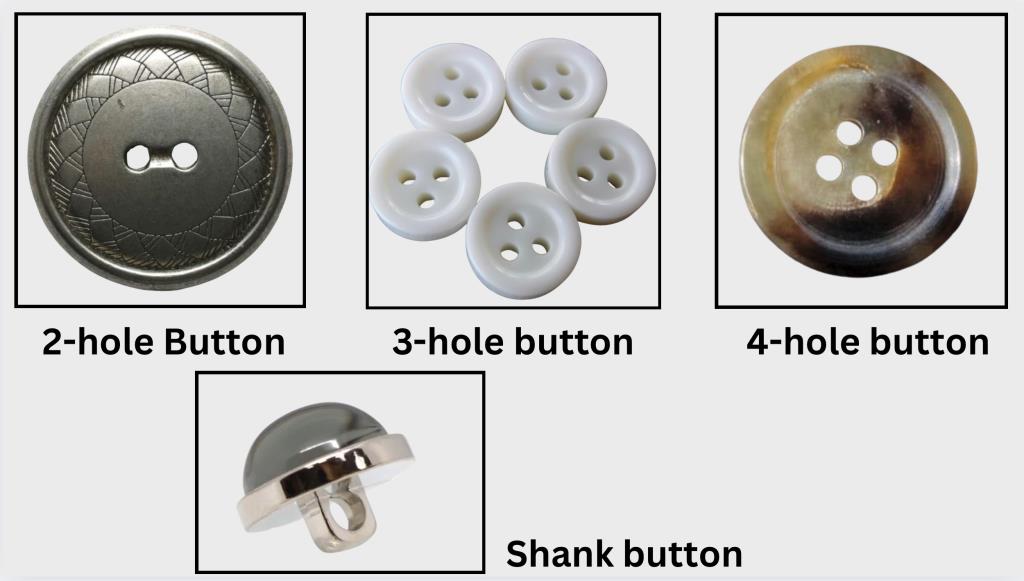
There are two basic types of buttons: Holed and Shank. A holed button may have two, three or four holes. A Shank button has one loop on the back. (Image credit: University of Fashion).
Button Materials – Buyer Beware
Buttons can be made from just about anything the imagination can dream up, however, you must remember that clothes containing buttons will need to be either laundered or dry cleaned and therefore buttons should be tested. Sometimes button color can bleed onto fabric, or buttons crack during the drycleaning process or even melt when hit with a hot iron. Therefore, always test your button choice.
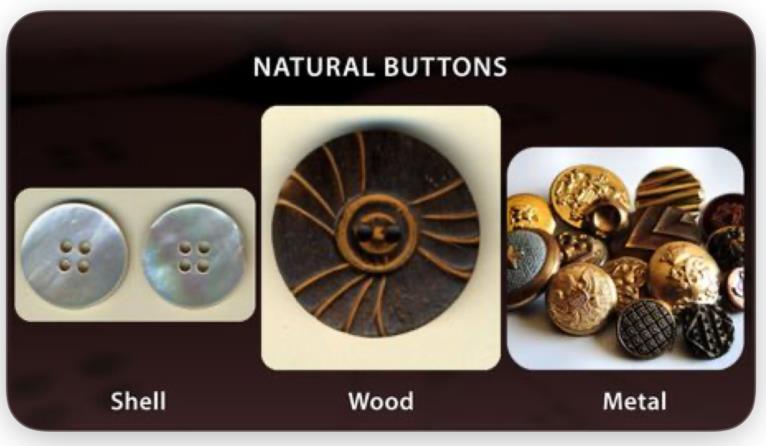
Examples of natural material buttons (Image credit: Sewing: Beginner Techniques book by Francesca Sterlacci, Laurence King Publishing).
Buttons are made from natural or synthetic materials — seashells, coconut shells — or synthetics like your grandma’s old bingo chips if inspiration strikes — but I repeat… your garment will eventually need to face the horrors of a washing machine or dry cleaner. That’s when untested buttons start to rebel. Colors bleed, plastics melt faster than an ice cream cone in Palm Springs, and cracks appear where creative genius once shone. Moral of the story? Don’t trust a button until it’s passed the laundry test.
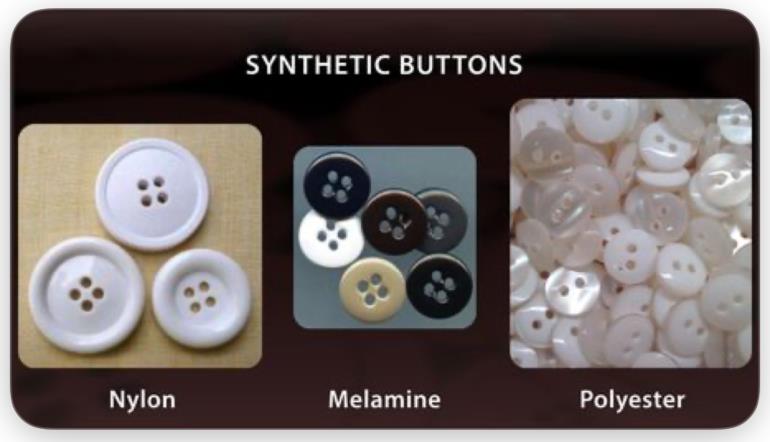
Examples of synthetic material buttons (Image credit: Sewing: Beginner Techniques book by Francesca Sterlacci, Laurence King Publishing).
Button Sewing Tools
When it comes to stitching buttons, a little planning goes a long way, unless you’re into the kind of chaos that has buttons flying off in public. You’ll need to decide whether to use standard sewing thread or the heavyweight champion of the thread world. The latter is perfect for those serious coats and jackets that don’t mess around, because nobody wants a button giving up mid-winter.
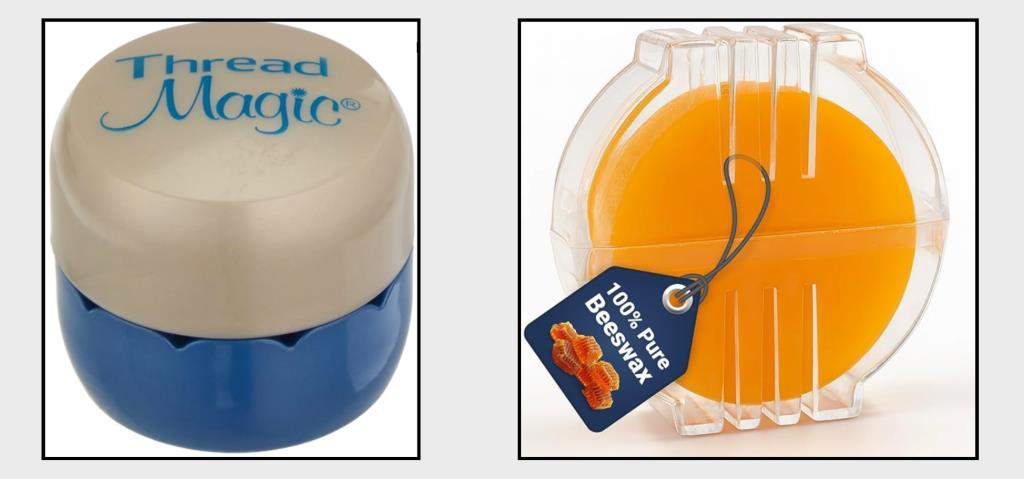
Examples of thread detangling tools (Image credit: University of Fashion).
To keep your thread from turning into a rebellious knot monster, give it a quick spa treatment first — run it across a little beeswax or Thread Magic to smooth and strengthen it. For bonus points, press it with a warm iron to melt away any sticky residue (and to remind it who’s boss).
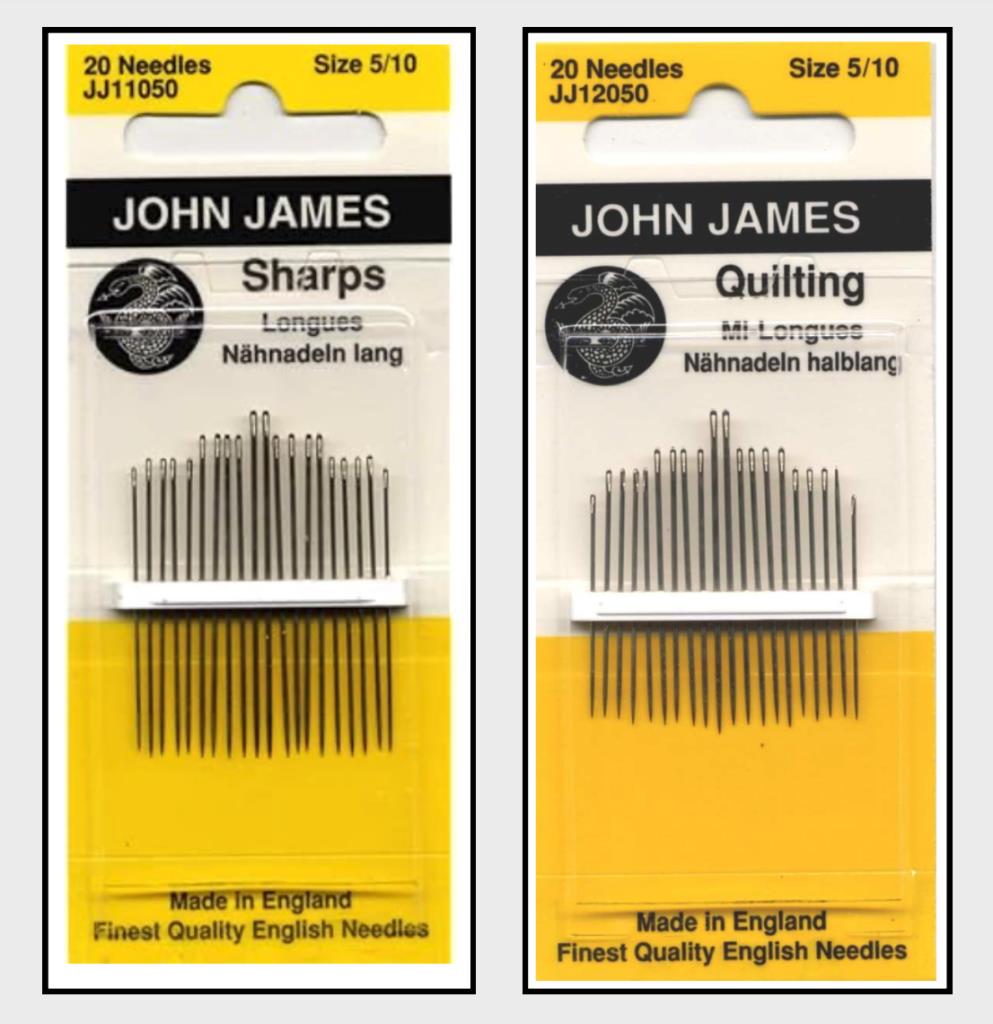
Choose a #5 Quilting/Betweens needle for button-sewing, it is shorter and easier to use than a #5 Sharps needle. (Image credit: University of Fashion).
When it comes to sewing on buttons, reach for a #5 Quilting/Betweens needle, it’s the compact sports car of needles: shorter, zippier, and way easier to handle than the longer #5 Sharps when navigating those tiny stitches.
Button-Sewing Strategies
You’d think sewing on a button would be a five-minute job. Ha! Think again. A four-hole button is basically a choose-your-own-adventure story in miniature — do you go vertical, horizontal, zigzag, or full drama with an X?
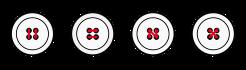
4-Hole Button-sewing Patterns: Vertical, Horizontal, Zigzag and X (Image credit: University of Fashion).
And if you really want to show off, grab a contrast thread so everyone knows your button isn’t just functional… it’s a fashion statement.
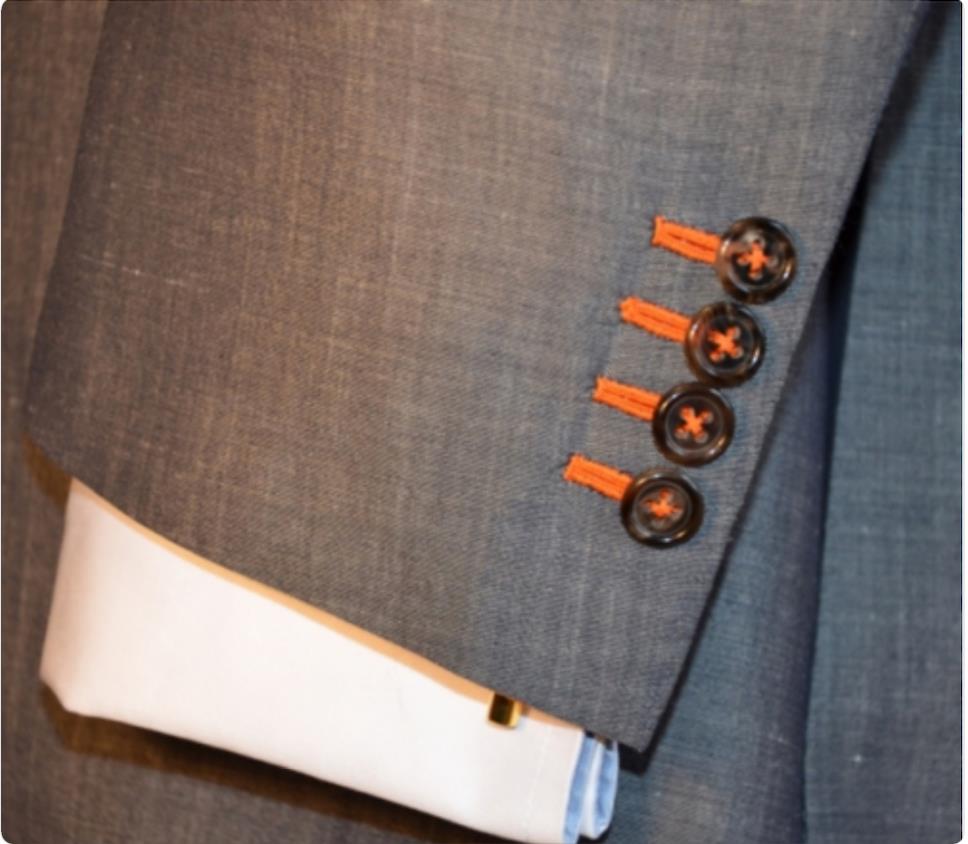
Examples of contrast thread for buttonholes & button-stitching (Image credit: University of Fashion).
Button Sizing
Back in the eighteenth century, German button makers got fancy with their measurements and came up with the term for measuring buttons, “ligne”. The idea was simple — if you fold a round candle wick flat (because apparently, everyone was doing that in their spare time), voilà — that’s your unit of measurement! One ligne equals 1/40th of an inch, or roughly .025 of an inch (.635 mm) if you’re more of a math person than a candle-folding enthusiast. Today, buttons are measured using a gauge device or a chart.
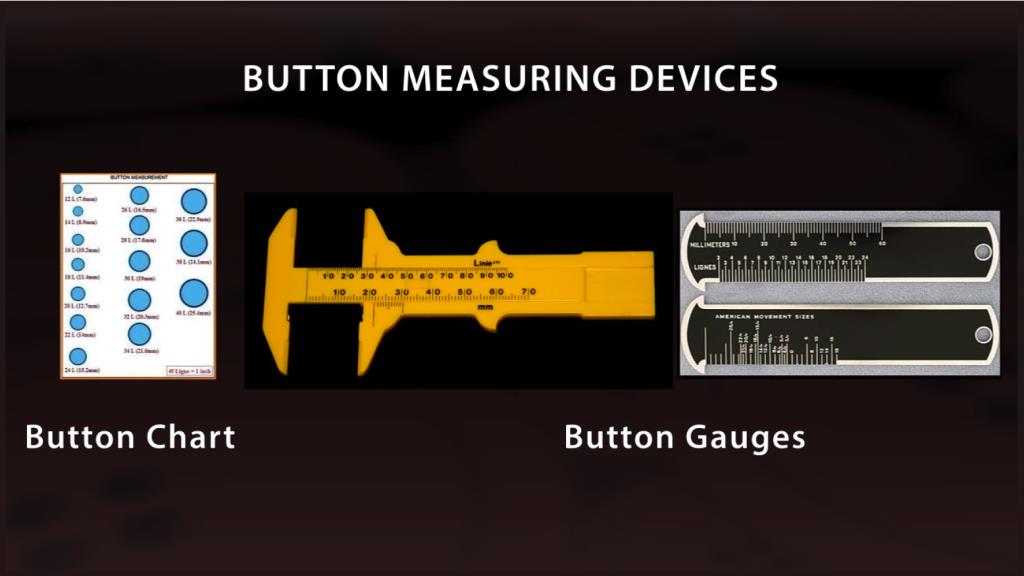
Examples of button chart and gauge devices for measuring button sizes. (Image credit: University of Fashion).
University of Fashion’s 7-part Button Series
Ready to dive into the riveting world of buttons and buttonholes? Discover why size does matter, how to choose the perfect button, how to line them up like a pro, and the surprisingly dramatic difference between sewing them by hand and by machine—all in our unmissable series!
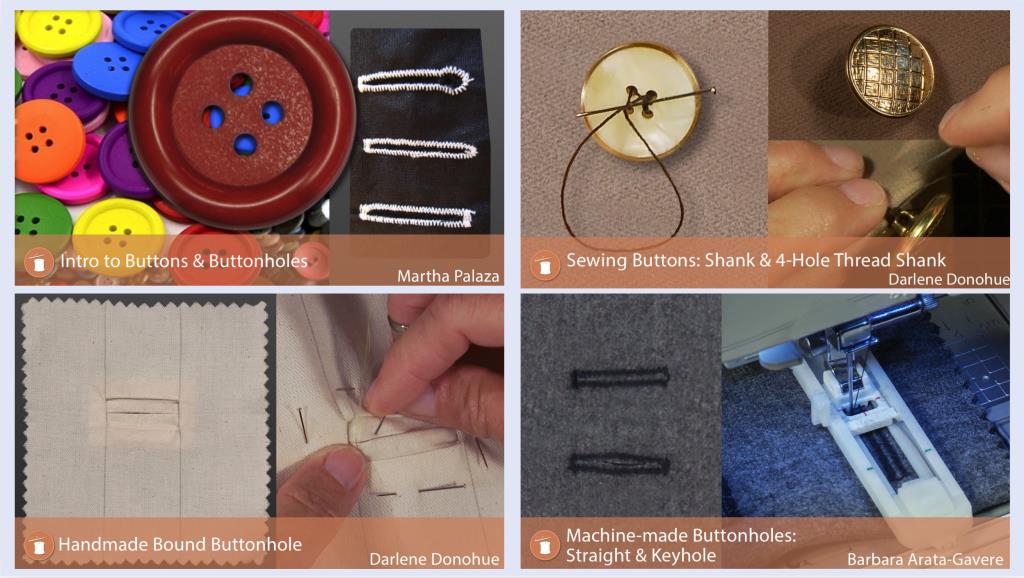
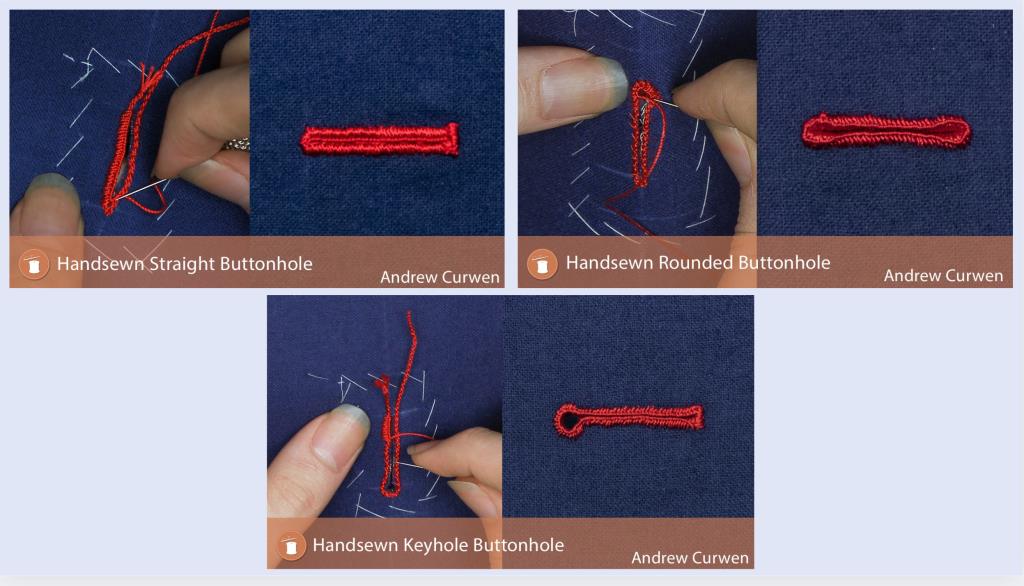
Click the links below to view our lesson previews on buttons & buttonholes or sign up to UoF and see the full video library of these and 545 other fashion how-to videos:
Intro to Buttons & Buttonholes
Sewing Buttons: Shank & 4-Hole Thread Shank
Handmade Bound Buttonhole
Machine-Made Buttonholes: Straight & Keyhole
Handsewn Straight Buttonhole
Handsewn Rounded Buttonhole
Handsewn Keyhole Buttonhole
-------------------------------------
By: Francesca Sterlacci
Title: BUTTONED UP: The Surprisingly Wild World of Buttons
Sourced From: www.universityoffashion.com/blog/buttoned-up-the-surprisingly-wild-world-of-buttons/
Published Date: Sat, 17 Jan 2026 21:32:30 +0000
Read More
Did you miss our previous article...
https://edmmusic.news/fashion-clothing/announcing-our-new-lesson-drafting-an-offshoulder-knit-top-two-variations
 FestivalsMusicNew ReleasesArtistsFashion & ClothingVideosPrivacy PolicyTerms And Conditions